This guide shares practical considerations based on the kinds of commercial facilities our team serves across Eastern Ontario.
A Quinte winter is hard on commercial floors. In Belleville, Trenton, Brighton and the towns between, salt and sand leave the parking lot on every pair of boots and start working on the finish as soon as they hit the door. By mid-afternoon in a plaza boutique, grocery vestibule, clinic waiting room or office lobby, it shows up as a white film, a dull traffic lane, or a crunch underfoot on the carpet.
Chloride ice melt and grit scratch finish, leave a residue that a dirty mop just spreads, and make hard floors slippery. Left in carpet, salt holds moisture and soil and wears the fibres. Our guide to winter entrance mats, salt and slush covers the vestibule in more detail.
What salt and slush actually do to floors
Lot and sidewalk crews in this part of Ontario still rely heavily on chloride ice melts, most often sodium chloride (rock salt), sometimes with calcium or magnesium chloride for colder nights. Once it is walked indoors, the salt dries into a film or crystals, and the grit acts like sandpaper.
ISSA, the cleaning industry association, notes that sodium chloride leaves a white residue that can dull floor finishes, and that calcium and magnesium chloride often leave an oily film. That film can damage wax and urethane finishes and make hard floors slippery. The same materials can wear carpet fibres and attract more dirt. Outdoors, chloride residue can also damage concrete, asphalt and masonry, one reason dock and plant entrances need their own winter plan.
What you will see indoors depends on the floor:
- VCT and vinyl plank: a white or cloudy film, then a worn path in the traffic lane. Once the finish is gone, soil works into the tile and a nightly mop will not restore the colour.
- Finished resilient floors: salt and grit attack the protective coat first. A dull, scratched lane usually means the finish is thinning.
- Concrete: on sealed warehouse or plant floors, salt film and grit wear the sealer and leave a haze. Standing brine at a dock door is harder on the slab than a quick dry mop.
- Carpet: crystals and grit in the pile, a stiff or crunchy feel when dry, greying that vacuuming does not lift, and faster wear in the first metres inside the door.
Start at the door, then keep going
A walk-off system is still the cheapest protection you have. ISSA often refers to a “Rule of 15s”: about five feet of scraper outside, five feet of wiper-scraper just inside, and five feet of wiper mat before the finished floor. A short decorative rug will not do the job. Vacuum mats daily in winter, extract them on a schedule, and replace a soaked mat instead of hoping it dries by morning. A wet, loaded mat is a soil dispenser, and salt that gets past it travels down the first aisle, into a waiting room, or along a warehouse lane.
Daily care versus periodic care
Daily work is about removing grit and residue before the next wave of traffic:
- Vacuum or dust-mop first. Wet mopping over grit scratches the finish.
- Use a neutral cleaner and change the solution when it is grey. Dirty water spreads salt film.
- Pay attention to edges, corners, baseboards and the last few metres of the entrance lane.
- Dry wet tile and vinyl so the afternoon's first customer does not slip.
- Vacuum entrance carpet and mats thoroughly, including the edges where slush collects.
On a storm day, a retail store may need a mid-day pass at the door, not only the usual closing clean. A quieter office may be fine with the evening visit, plus a check after a heavy squall. Dental, physio, chiro and vet clinics often need waiting-room and corridor floors kept dry between patients, even when clinical rooms stay with the clinic team.
Periodic work is what the mop cannot finish: auto-scrubbing packed film, extracting entrance carpet, and a scrub and recoat, or a strip and wax, when the finish is worn. Walk the entrance in daylight once a month, and again in March, before you drop the winter routine.
Auto-scrubbing and carpet extraction
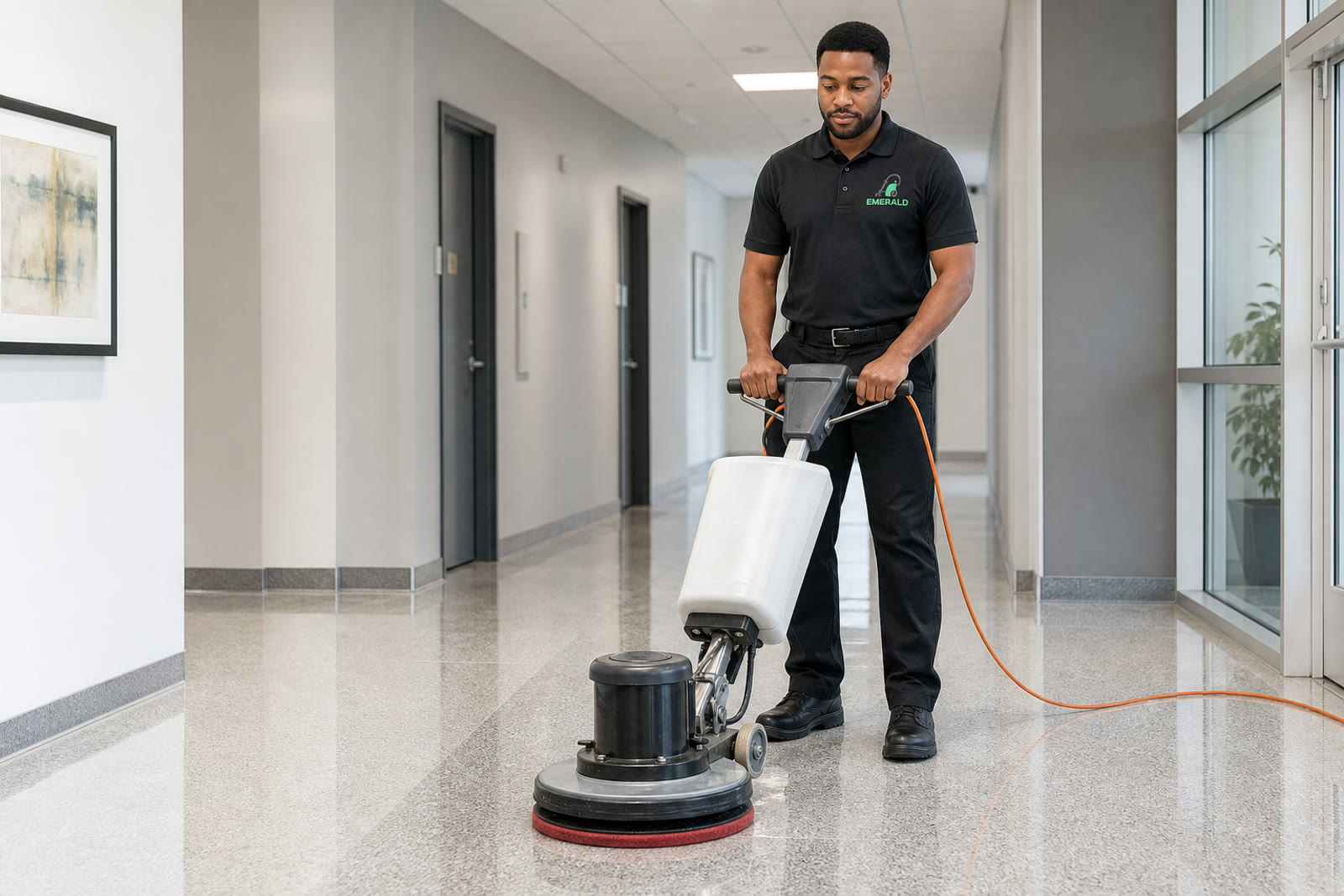
A mop moves dirty water. An auto-scrubber applies cleaner, agitates and picks the solution back up, which is what you want when salt film has been walked in all day. Walk-behind machines suit stores, clinic corridors and office floors. Ride-on scrubbers and sweepers suit warehouse aisles, staging lanes and plant floors, where soil starts at the dock door and travels a long way. Sweep first when there is loose grit, then scrub. Edges still need a wand or a mop.
Do not wait until April to extract entrance carpet. Salt and grit left in the pile wear the fibres underfoot. ISSA's winter carpet advice is to vacuum high-traffic areas and mats daily, and to extract entry carpet more often in winter, not less. Vacuum first while the residue is dry, then extract and allow enough drying time before opening.
Emerald Cleaners uses walk-behind and ride-on auto-scrubbers, sweepers, HEPA vacuums and carpet extractors. We schedule this work overnight, on weekends or before opening so the floor is dry when staff and customers arrive.
A winter floor-care checklist
- Confirm mat length and condition at every public, staff, dock and receiving door.
- Assign who vacuums or shakes mats, and how often on storm days.
- Dust-mop or vacuum hard floors before any wet cleaning.
- Change mop or auto-scrubber solution when it is grey, and dry the traffic lane.
- Vacuum entrance carpet daily, and book interim extractions through the winter.
- Watch for slip hazards: wet slush is obvious, but an oily chloride film can stay slippery even when the floor only looks dull.
- Walk the entrance in daylight once a month and again in March. Look for white film, worn finish, grey grout and crunchy carpet.
- Write after-hours or before-opening access into the plan if machine work needs an empty floor.
When to call in a floor-care crew
Call when the white film returns the same day, the traffic lane has lost its finish, carpet stays grey or stiff after a thorough vacuum, or you cannot run a machine without interrupting customers or patients. Name the floor types and the doors that take the worst soil, and say whether you need recurring winter service, a periodic auto-scrub or extraction, or a restoration visit.
If you want help, tell us your hours, floor types and which doors take the weather when you request a quote. Overnight, weekend and before-opening visits are something we already plan around access, keys and alarm instructions in Belleville, Trenton, Quinte West, Brighton and nearby towns.
Need a hand with winter floors?
We'll walk your site and set up a plan for salt, slush and busy entrances.
Frequently asked questions
Why does a white film keep coming back after we mop?
That film is usually dried chloride residue, sometimes with an oily layer from calcium or magnesium chloride ice melt. A mop that is already grey just moves it around. Dust-mop or vacuum first, use clean neutral solution, pick the water up, and dry the lane. If the film returns the same day, the entrance needs more frequent care, better matting, or an auto-scrub, not a stronger chemical.
How often should we mop or auto-scrub floors in winter?
Frequency should follow traffic and the weather, not building size. Many offices are fine with a thorough evening clean and a check after a heavy squall. Busy retail doors and clinic waiting rooms may need a mid-day pass on storm days, plus the usual close or before-opening service. Auto-scrubbing is periodic or storm-driven: use it when packed film or a large hard-floor area is more than a mop can lift.
Should we wait until spring to extract entrance carpet?
No. Salt and grit left in the pile wear the fibres all winter. Vacuum entrance carpet and mats daily, and extract those high-soil areas more often during the season, with enough drying time before opening. A spring extraction can still be useful as a reset, but it should not be the first time salt comes out of the carpet.
Can winter floor care be done before opening, overnight or on a weekend?
Yes. Auto-scrubbing, extraction and any finish work are easier when the floor is empty and can dry before the next customer or patient arrives. When you request a quote, tell us your hours, floor types and access notes so those visits can be written into the plan.
When do we need more than a winter cleaning routine?
If the traffic lane has worn through the finish, grout is packed, or carpet stays grey and stiff after vacuuming and extraction, you are looking at restoration: a scrub and recoat or strip and wax on suitable resilient floors, or a deeper carpet visit. Book that as a planned project, usually in spring or on a closed morning, rather than adding more chemistry to the nightly mop.
Professional commercial cleaning across Belleville, Kingston, Quinte West, Napanee and surrounding communities.
 6 min