This guide shares practical considerations based on the kinds of commercial facilities our team serves across Eastern Ontario.
Ontario clinics have to separate clinical contact surfaces from housekeeping surfaces, and a cleaning contractor only owns one of them. Here is how to split the scope so nothing falls between the clinic and the cleaner.
Emerald Cleaners wrote this guide for commercial facilities in Eastern Ontario. It is operational advice for this topic, not a copied template and not medical or legal advice.
Two categories of surface, two different owners
Ontario infection prevention and control guidance splits a clinic into clinical contact surfaces and housekeeping surfaces. Clinical contact surfaces are the ones touched during care: operatory countertops, chair controls, light handles, tray tables, equipment housings. Housekeeping surfaces are floors, walls, corridors, waiting rooms, staff rooms and washrooms. The distinction matters because a commercial cleaning contractor owns the second category and almost never the first.
The Royal College of Dental Surgeons of Ontario standard is explicit that clinical contact surfaces must be cleaned and disinfected between patients and again at the end of the workday. That cadence cannot be delivered by an after-hours cleaner, because the between-patient part happens while the clinic is running. It is clinical staff work, under the clinic's own written policy.
Where clinics get into trouble is assuming the cleaning contract silently covers the operatory because the cleaner is in the building. It does not, unless somebody wrote it down. Our medical office cleaning scope names the public, staff and non-clinical areas we cover and states plainly that clinical protocols stay with the facility.
Disinfectant choice and contact time are written requirements, not preferences
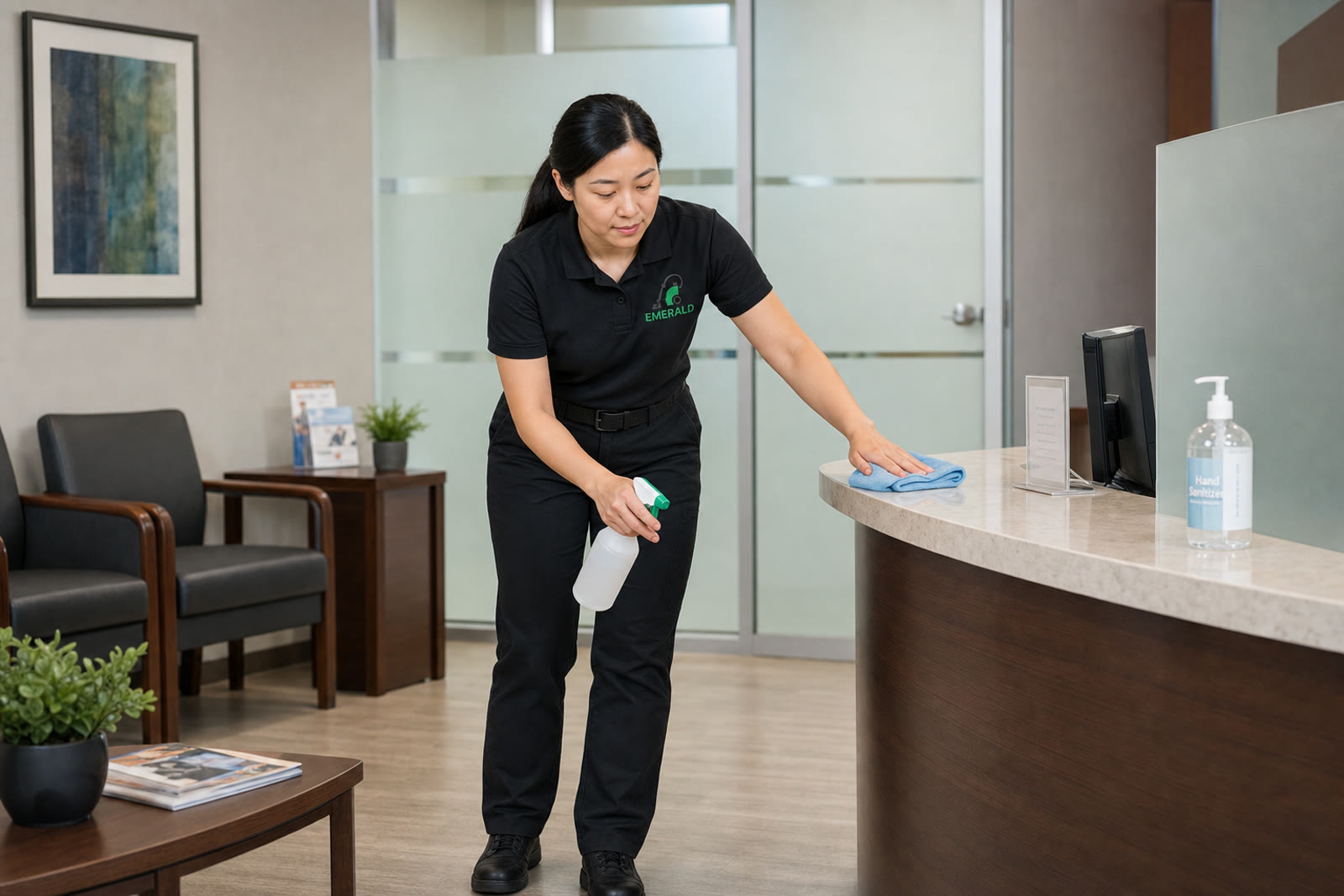
Ontario guidance calls for a hospital-grade low-level disinfectant carrying a Drug Identification Number from Health Canada. A DIN is not decoration; it is how you demonstrate the product is licensed for the claim you are relying on. If your cleaner cannot tell you the DIN of the product used in your washrooms, you cannot answer that question for an inspector either.
Contact time is where most real-world failures happen. A disinfectant only works if the surface stays visibly wet for the full time the manufacturer's instructions specify. Spraying and immediately wiping dry is a cosmetic clean, not a disinfection, and it is the single most common shortcut in the industry. Ask how long your product needs and whether the routine actually allows it.
Cleaning before disinfection is also not optional on soiled surfaces. Organic soil interferes with the chemistry, which is why the sequence is clean, then disinfect, then allow dwell time. The same logic applies to our fogging disinfection work: fogging is an application method layered on top of a cleaned surface, not a substitute for one.
Barriers, clutter and the parts of the room a cleaner cannot reach
Clinics that use surface barriers must remove them with gloves between patients, inspect the surface underneath, and clean and disinfect anything that became contaminated. At the end of the day all barriers come off and the surfaces get cleaned. Again, that is a clinical routine, but it has a direct effect on the cleaning contract: a room that is barriered all day still needs an end-of-day surface reset, and somebody has to own it in writing.
The guidance also asks that treatment areas stay organized and free of unnecessary equipment and supplies, especially on countertops. This is the quiet reason some clinics feel like the cleaning is poor. A counter covered in boxes cannot be wiped, and no contractor will move clinical supplies to reach underneath. If you want a surface cleaned, it has to be clear at the end of the day.
Write a short end-of-day handover into your own policy: barriers removed, counters cleared, sharps and clinical waste dealt with by staff, then the room is available. That turns a recurring complaint into a two-minute task with an owner.
Instrument reprocessing is never part of a cleaning contract
Critical and semi-critical instruments must be cleaned, rinsed, dried and then heat sterilized between patients, with physical, chemical and biological monitoring of the sterilizer and written records of each cycle. Chemiclaves and bead sterilizers are not acceptable methods. None of this belongs to a commercial cleaner, and any vendor who offers to help with it should end your evaluation immediately.
Regulated medical waste and sharps are the same story. They stay with the facility under its own disposal arrangements. Our scope moves general waste from named rooms to the collection point you designate, and that boundary is stated in the quote rather than assumed.
Being clear about this is not a limitation, it is what makes the rest of the scope trustworthy. A cleaner who claims to handle everything is a cleaner who has not read the standard.
What Eastern Ontario clinics should actually put in the cleaning scope
Reception desks and waiting-room seating, corridors, staff rooms and lunch areas, washrooms with restocking, floor care matched to the finish, interior entry glass, and waste transfer from named rooms. That is a complete non-clinical scope, and for most clinics in Belleville, Kingston or Trenton it is the right list.
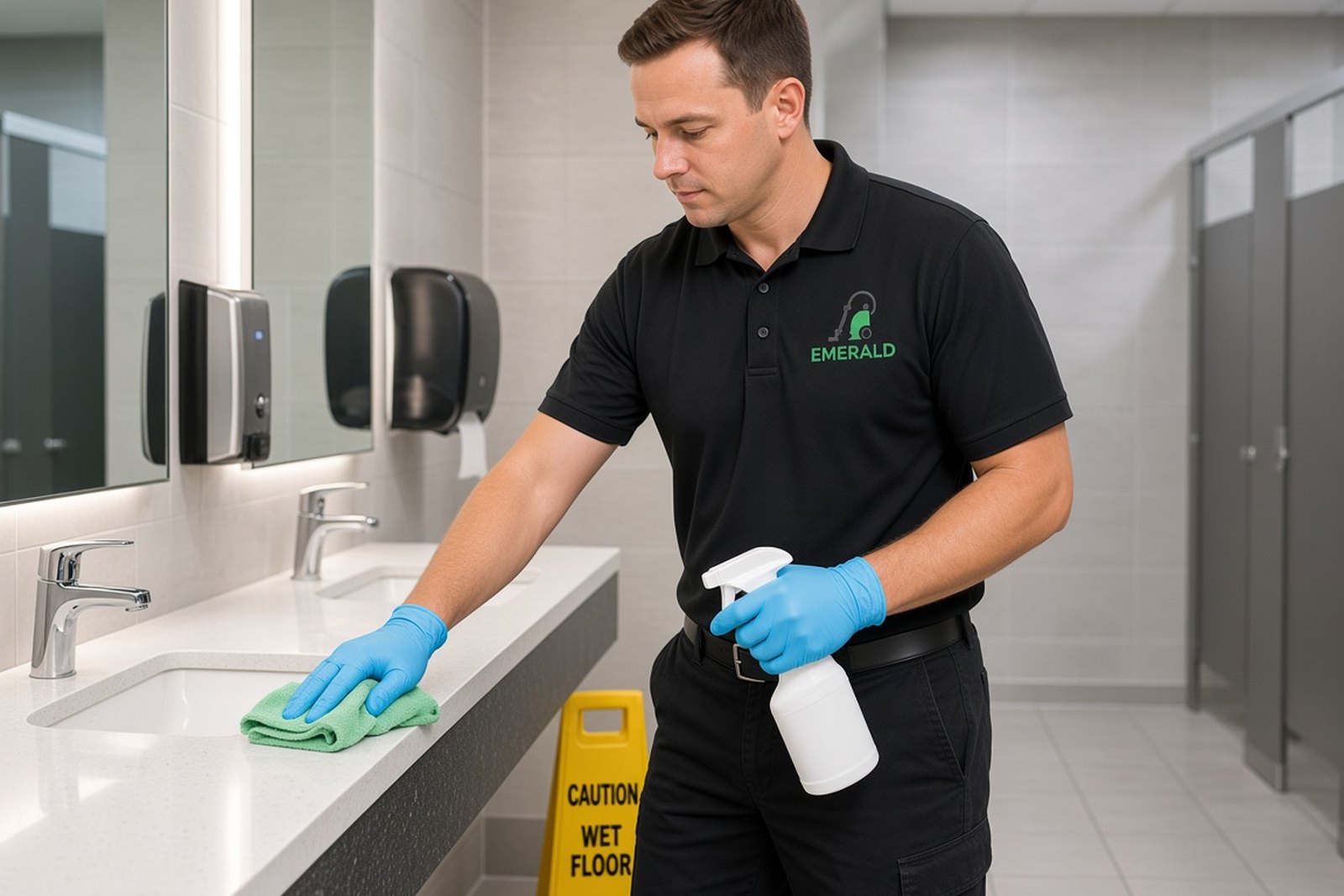
Set the washroom frequency against patient volume rather than office size. A clinic seeing ninety patients a day is a high-traffic public washroom environment, not a professional office one, and our guide to commercial restroom standards covers how to write that frequency so it can be inspected.
Ask for the document trail too. Liability insurance, WSIB clearance, staff screening and Safety Data Sheets for every product used on site. The RFP and scope template on this site includes those as standard sections, because a clinic is exactly the setting where a vendor file gets requested.
Audits, public health and why the split needs to be on paper
Public Health Ontario provides the scientific basis for these practices, the Ministry sets standards applied by local public health units, and the College publishes a self-audit form clinics are encouraged to use periodically. Your local unit — Hastings Prince Edward Public Health, or KFL&A for Kingston-area sites — works to its own mandate and complaint protocol.
When any of them ask who cleans what, the answer should be a document, not a recollection. A written cleaning scope that names rooms, frequencies and exclusions does half that work for you, and it protects the cleaner from being blamed for a clinical task nobody assigned.
Emerald Cleaners provides environmental cleaning to an agreed written scope. We do not certify regulatory compliance on a clinic's behalf. If you want the non-clinical side of your building covered properly, request a walkthrough or call 613-922-8074 Monday to Friday between 9 and 4. This guide is operational advice, not legal or clinical advice.
Next step for this topic
Ontario clinics have to separate clinical contact surfaces from housekeeping surfaces, and a cleaning contractor only owns one of them. Here is how to split the scope so nothing falls between the clinic and the cleaner.
If that matches your building in Eastern Ontario, review medical office cleaning or request a free quote. Emerald Cleaners is at 108 Cannifton Rd N, Belleville, ON K8N 4Z6. Call 613-922-8074 Monday to Friday, 9 to 4. More in Healthcare & Hygiene and the resource centre.
Professional commercial cleaning across Belleville, Kingston, Quinte West, Napanee and surrounding communities.
 6 min
6 min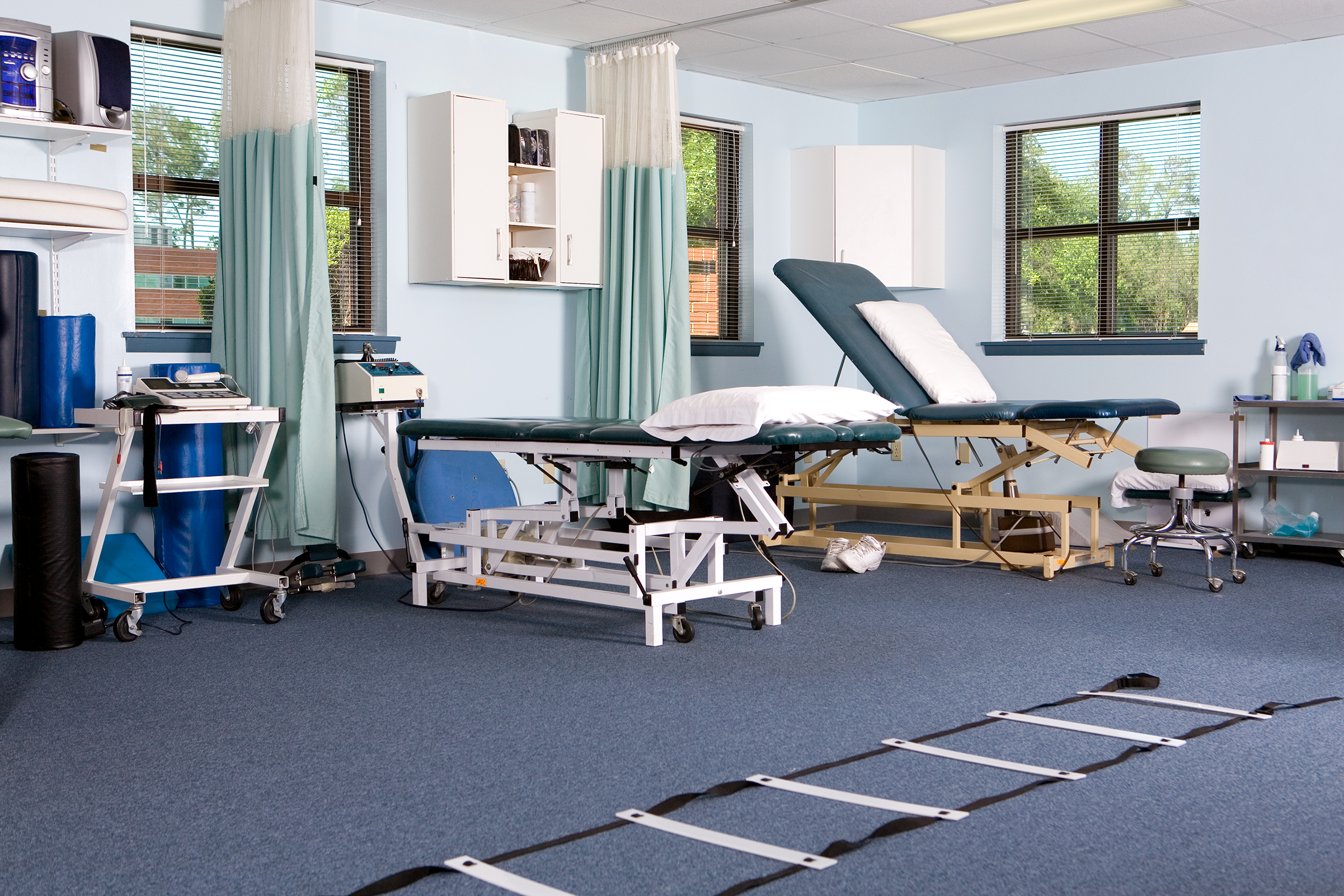 6 min
6 min 6 min
6 min