This guide shares practical considerations based on the kinds of commercial facilities our team serves across Eastern Ontario.
A food-processing plant is not a warehouse with a stricter mop. In Belleville, Quinte West, Trenton and the towns between, production floors take grease, protein, sugars, flour dust and rinse water, then get walked and rolled over for the rest of the shift. The floor has to be clean and dry before the next crew arrives, and the work has to happen without stopping the line.
Local processors have been adding production space, which means more floor to keep ahead of, on the same overnight or between-shift window. This guide is about the floors, docks, staff rooms and washrooms around that production: how to schedule the work, which machines actually lift the soil, and how to keep slip risk down. For the broader warehouse and industrial plan, see our warehouse and industrial floor cleaning page. Cleaning of production equipment is a different job, and it is not part of a standard floor-cleaning scope.
What food-plant floors actually deal with
Soil on a plant floor is not the same as office dust. Depending on the product, you may be looking at animal or vegetable fats, protein films, sticky sugars, starch or flour dust, and a lot of water from rinsing and condensation. Pallet jacks and forklifts spread that soil from the dock into staging and along traffic lanes. Shrink-wrap scraps and cardboard dust collect at the edges.
Two problems show up quickly if that soil sits:
- Slip risk. A thin film of grease or a wet lane is a fall waiting to happen, including in corridors and at doorways that look only slightly dull.
- Soil travel. Residue that is mopped with dirty water, or walked from a dock into a cleaner zone, ends up where you did not want it.
Hard floors in plants are often sealed concrete or a resin system such as epoxy, with resilient floors in offices, lunch rooms and sometimes corridors. The method has to match the floor. A cleaner that is fine on one surface can dull or damage another, so the walkthrough should name the floor type in each zone before any chemistry is chosen.
Clean by zone, not as one big room
Food plants already divide the building into hygiene zones, and floor cleaning should follow those lines. A typical plan separates:
- Production and packing floors, where traffic and soil are heaviest and the site's PPE and hygiene rules are strictest
- Staging, corridors and dock doors, where outdoor soil, salt and pallet traffic enter
- Staff rooms, lockers and washrooms, which your own people judge as carefully as any visitor
- Front offices and meeting rooms, which can sit on a lighter routine
Emerald Cleaners follows the hygiene zones, PPE, sign-in and traffic rules your site already sets. Machines, tools and footwear stay in the zones they belong to, so dock soil is not rolled into a cleaner area. Rooms that are off-limits, including around live production equipment, are written into the plan before the first visit.
A schedule that works around production
The best time to clean a plant floor is when the line is down and the forklifts are parked: overnight, between shifts, or on a weekend. That gives the floor time to dry before the next crew walks it, and it keeps machines out of a live aisle.
We schedule this work around your production calendar, and we work one zone at a time so a busy dock does not have to stop. Before the first visit we agree on keys or alarm codes, sign-in, PPE, parking and any rooms that stay locked, and those instructions go into the plan the crew follows every time. If a mid-week shutdown or a sanitation window is already on your calendar, floor work can be timed to that window rather than competing with it.
A mop at the end of a shift is often not enough on a greasy or dusty floor. The schedule should say which zones get a daily machine scrub, which get a sweep and a damp pass, and which staff areas are cleaned every visit.
Machines that lift the soil, instead of spreading it
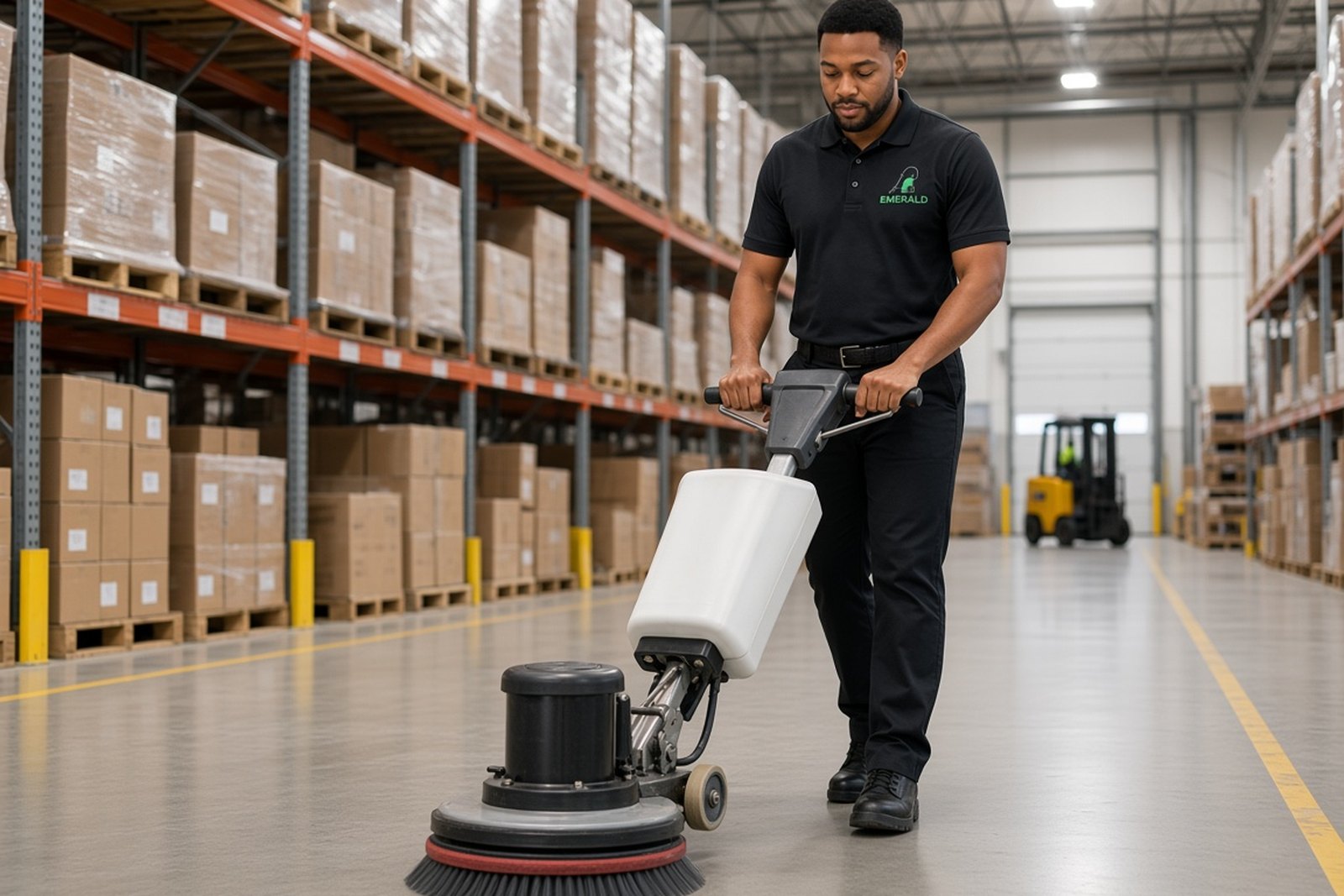
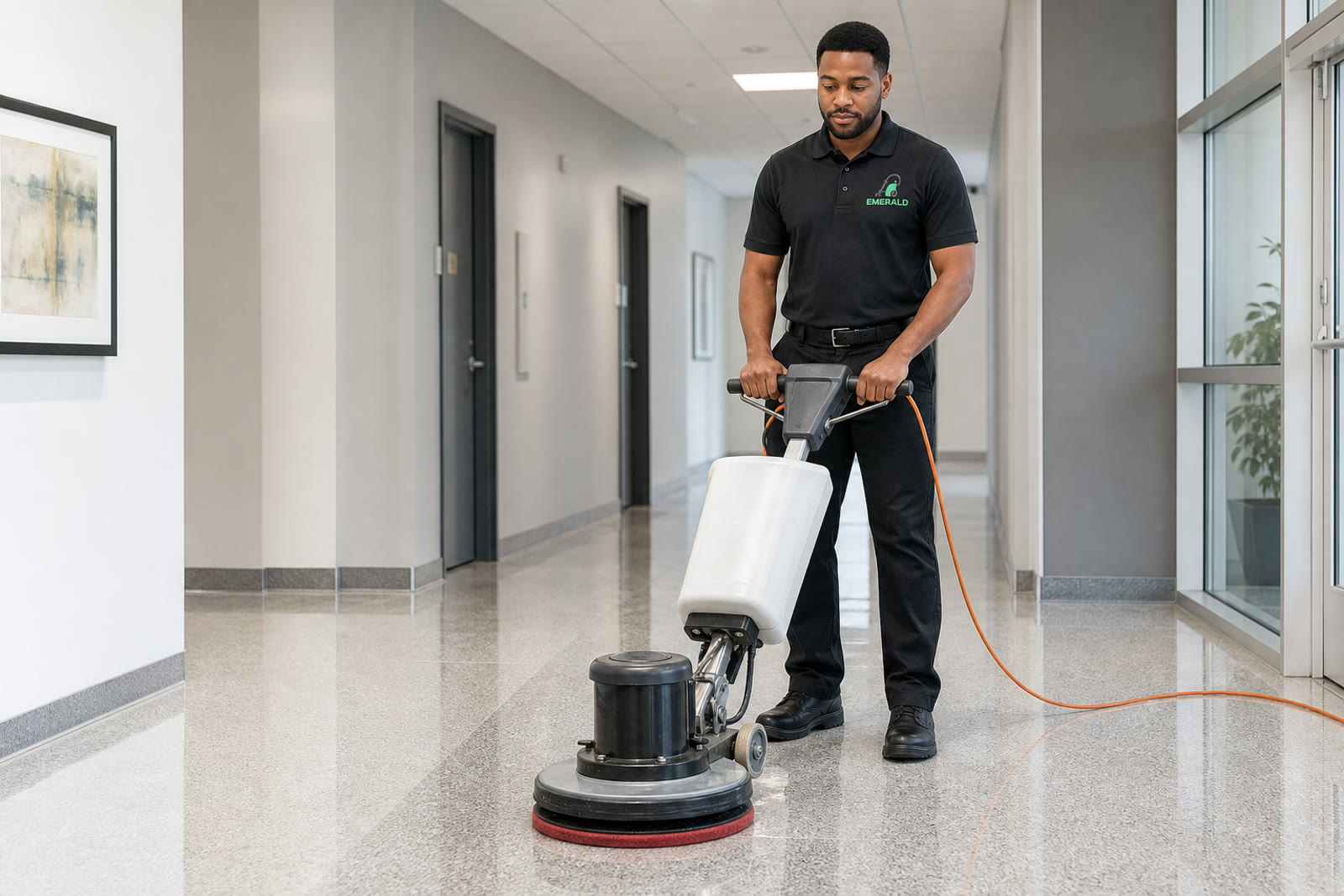
A mop on a large plant floor mostly pushes dirty water around. An auto-scrubber applies cleaner, agitates and picks the solution back up, which is what you want when grease, film or fine dust has been walked in all day.
Emerald Cleaners uses walk-behind and ride-on auto-scrubbers, sweepers and HEPA vacuums:
- Sweep first when there is grit, crumbs, shrink-wrap or cardboard dust. Scrubbing over loose debris just grinds it in.
- Ride-on auto-scrubbers for long aisles, staging lanes and open floor.
- Walk-behind auto-scrubbers for tighter production areas, docks and the edges around equipment and racking.
- HEPA vacuums where fine dust, including flour or starch, should be captured rather than blown into the air.
Edges, corners and the last half-metre against a wall still need a wand or a mop after the machine has done the open floor. Change the solution when it is dirty; grey water leaves a film that looks clean until it dries.
Office and lunch-room floors can sit on a separate floor stripping and waxing schedule when the finish is worn. At dock doors in winter, salt and slush need their own plan; our winter salt floor-care guide covers that in more detail.
Keep the floor safe to walk on
Slips on wet or greasy floors are a real risk in plants. The cleaning plan should leave floors dry before the next shift, mark a lane that is still wet, and treat a dull, oily film as a slip hazard even when there is no standing water. If a spill happens during production, that is your site's own response; a scheduled cleaning visit is not a substitute for a spill procedure.
What is in a standard food-plant floor plan, and what is not
A standard plan covers the floors and the supporting rooms:
- Sweeping and auto-scrubbing of production, packing, staging and dock floors, to the zones and frequency in the written scope
- Dust and debris control at shipping and receiving doors
- Lunch rooms, lockers and washrooms, including restocking of agreed supplies
- Front office and meeting-room routines
- Periodic dusting of reachable ledges and sills
It does not include cleaning of production equipment, work at height, lift operation, regulated spill response or confined-space entry, unless a written quote expressly adds them. Those jobs need different training and often the equipment manufacturer's own procedure. If you need any of them, say so at the walkthrough so they can be scoped separately, rather than assumed.
A practical checklist for plant floors
- Map hygiene zones and name the floor type in each one.
- Write when each zone is cleaned: overnight, between shifts or on a weekend, with enough drying time before the next shift.
- Sweep or vacuum loose soil before any wet work.
- Use an auto-scrubber on open floor; finish edges and corners after.
- Change solution when it is dirty, and leave the floor dry.
- Keep dock soil from travelling into cleaner zones, including in winter when salt comes in with it.
- Confirm PPE, sign-in, keys or alarms, and off-limits areas before the first visit.
- Say clearly what is out of scope, especially production equipment.
Need a hand with plant floors?
We'll walk your site, work around your shifts, and put the machines and the schedule in a written plan.
Frequently asked questions
Do you clean food-processing plants in Belleville and the Quinte area?
Yes. We clean plant floors, staff rooms and washrooms at food-processing and manufacturing sites in Belleville, Trenton, Quinte West, Napanee, Kingston and nearby towns, coordinated from our Belleville office. We follow the hygiene, PPE and sign-in rules each site sets. Every site starts with a walkthrough, a written scope and a free estimate.
Can the work be done overnight, on a weekend or between shifts?
Yes. That is usually the better window, because aisles are clear and the floor can dry before the next shift. When you request a quote, tell us your production hours and access notes so those visits can be written into the plan.
Do you clean production equipment as well as the floors?
Not as part of a standard floor-cleaning plan. We clean the floors around the line, plus staff rooms, washrooms and offices. Cleaning of production equipment, work at height, lift operation, regulated spill response and confined-space entry are only included if they are written into the quote.
How do you keep dock soil from ending up in a cleaner zone?
The plan follows your hygiene zones. Machines, tools and traffic stay in the areas they belong to, and dock and receiving floors are treated as a higher-soil zone with their own pass. We confirm those rules, along with PPE and any off-limits rooms, before the first visit.
What should we have ready for a walkthrough?
A list of floor types by zone, your production and sanitation hours, access and alarm instructions, PPE requirements, and a note on any areas that are off-limits. If you already have a written hygiene or traffic map, bring that too. It is the fastest way to get a scope that fits the building.
Professional commercial cleaning across Belleville, Kingston, Quinte West, Napanee and surrounding communities.
 7 min